Which Canary Island: warmth, sun, sea, crowds and rent compared on official data
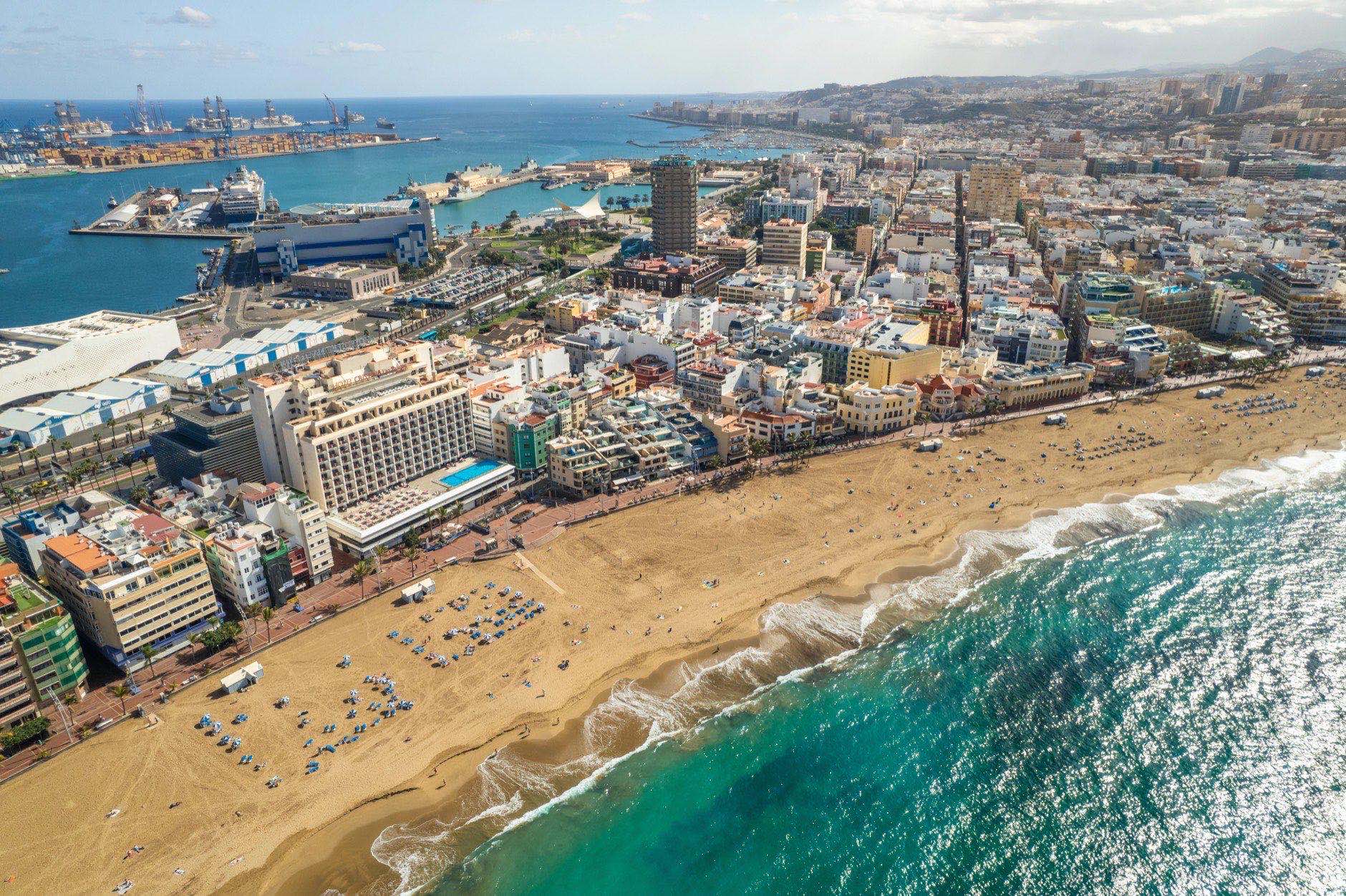
There is no best Canary Island, only the best island for a particular question. Almost every such question has an official measurement behind it. The warmest winter days and the warmest winter nights are on different islands, and the sunniest spot is on a third.
Short answers
- Warmest winter days: Tenerife, 22.2 °C on average from December to February (Tenerife South airport).
- Warmest winter nights: El Hierro, 16.9 °C (El Hierro airport).
- Most winter sun: Lanzarote, 600 hours over the three winter months (Lanzarote airport).
- Warmest sea in the coldest month: La Palma and La Gomera, 19.7 °C.
- Fewest hotel guests per resident: La Palma, 12 nights a year.
- Lowest rent at our places: La Palma and La Gomera, €480 a month (Los Llanos de Aridane and San Sebastián de La Gomera).
Below is where each figure comes from and how big the gap really is. Sometimes it is smaller than the brochures suggest: a winter day by the sea differs by no more than 1.1 °C across the islands. Sometimes it is larger: guests per resident differ 9-fold.
The islands side by side
| Island | Residents | Winter high | Winter sun, h | Coldest sea | Hotel nights per resident | Rent at our places |
|---|---|---|---|---|---|---|
| Tenerife | 961,745 | 22.2 °C | 583 | 19.5 °C | 27 | €580–633 |
| Gran Canaria | 870,608 | 21.4 °C | 554 | 19.2 °C | 23 | €520–600 |
| Lanzarote | 167,406 | 21.3 °C | 600 | 18.5 °C | 69 | €500–611 |
| Fuerteventura | 129,541 | 21.2 °C | 566 | 18.7 °C | 106 | €481–510 |
| La Palma | 86,194 | 21 °C | 425 | 19.7 °C | 12 | €480–500 |
| La Gomera | 22,442 | — | — | 19.7 °C | 20 | €480 |
| El Hierro | 12,040 | 21.3 °C | 441 | — | — | — |
Residents as of 1 January 2025. Winter is the average daytime high and the total sunshine for December, January and February at a station near the sea. Sea is the average coldest month off our places. El Hierro has none of our places, so there is no sea or rent figure. La Gomera has no weather-service station with a normal near the sea.
Which island is warmest in winter
The weather service’s climate normal (AEMET) is a thirty-year average, 1981–2010, for each station. Where the station stands matters. A normal describes the spot with the thermometer, not the whole island, and altitude moves it more than the choice of island does.
| Station | Altitude, m | Daytime high | Night low | Sun, h | Rain days | Rain a year, mm |
|---|---|---|---|---|---|---|
| Tenerife South airportTenerife | 64 | 22.2 °C | 15.6 °C | 583 | 7.5 | 132 |
| Santa Cruz de TenerifeTenerife | 36 | 21.4 °C | 15.8 °C | 532 | 13.4 | 226 |
| Gran Canaria airportGran Canaria | 24 | 21.4 °C | 15.4 °C | 554 | 10.6 | 151 |
| El Hierro airportEl Hierro | 32 | 21.3 °C | 16.9 °C | 441 | 10.4 | 206 |
| Lanzarote airportLanzarote | 14 | 21.3 °C | 14.6 °C | 600 | 9.7 | 111 |
| Fuerteventura airportFuerteventura | 25 | 21.2 °C | 15.1 °C | 566 | 8.1 | 98 |
| La Palma airportLa Palma | 33 | 21 °C | 15.8 °C | 425 | 17.5 | 369 |
| Tenerife North airportTenerife | 632 | 16.6 °C | 10.6 °C | 455 | 23.9 | 520 |
December to February, 1981–2010 normal. The warmest days are at Tenerife South airport, 22.2 °C; the warmest nights at El Hierro airport, 16.9 °C. But at sea level every station sits within 1.1 °C of the others for daytime warmth. A gap that size is not something you feel in the street.
Altitude is another matter. Tenerife North airport stands at 632 m, and its winter days are 4.8 °C cooler than down in Santa Cruz; its nights 5.2 °C cooler. That is more than the gap between any two islands at sea level. So the question «which island is warmer» is really a question of how high up you live. AEMET normals.
In summer the order changes. The hottest August by the sea is at Lanzarote airport: 29.1 °C by day. The mildest is at El Hierro airport: 26.1 °C. Anyone moving for the whole year rather than the winter has as much reason to read this line as the January one.
Sun and rain: east against west
With sunshine the gap is real. Lanzarote airport gets 600 hours of sun over the three winter months; La Palma airport gets 425. That is 29% less, roughly 117 minutes of sun a day. The fewest winter rain days are at Tenerife South airport: 7.5 over three months. Count fully clear days instead and Tenerife South airport leads again: 23.5 over the winter, against 13.5 at Lanzarote airport. More hours of sun come where clouds pass through; more clear days where they rarely form at all.
Over a whole year the picture is the same, only sharper. Fuerteventura airport gets 98 mm of rain a year; La Palma airport, 369 mm. Both eastern stations, Lanzarote and Fuerteventura, are sunnier and drier than both western ones, La Palma and El Hierro, though the west is warmer at night.
The sea
The sea divides east from west too. The coldest month is March, except off La Gomera, where it is February. That month the water off our places on La Palma is 19.7 °C, on Lanzarote 18.5 °C. Summer shows the same gap: the warmest month runs from 23.1 °C to 24.4 °C. These are 2015–2024 averages from NOAA satellite data: open water off each island, not a reading at a beach. NOAA OISST.
For swimming the usual line is 20 °C: below it the water feels cold even on a hot day. Months with the sea at that level or above, off our places: Tenerife 10, La Palma 10, La Gomera 10, Gran Canaria 8, Lanzarote 8, Fuerteventura 8. The line runs exactly along the provinces: every western island (Tenerife, La Palma, and La Gomera) has a longer swimming season than every eastern one (Gran Canaria, Lanzarote, and Fuerteventura). It is the most tangible way the west differs from the east. No island keeps its water above the line all year: everywhere the coldest month falls below 20 °C.
Which island is quietest
Quiet can be counted. The statistics office (INE) publishes, every month, how many nights guests spent in each island’s hotels. Divide a year of nights by the island’s residents and you see how many visitors there are for each local. Nights run from September 2025 to August 2026; residents are the sum of the island’s municipalities in the municipal register on 1 January 2025.
| Island | Residents | Hotel nights a year | Per resident | Hotel beds per 100 residents | Guests from abroad | Occupancy, low–high |
|---|---|---|---|---|---|---|
| La Palma | 86,194 | 1,007,333 | 12 | 5.5 | 62% | 46%–81% |
| La Gomera | 22,442 | 448,981 | 20 | 9.7 | 77% | 36%–73% |
| Gran Canaria | 870,608 | 20,251,968 | 23 | 8.1 | 87% | 68%–84% |
| Tenerife | 961,745 | 26,235,128 | 27 | 10 | 86% | 64%–79% |
| Lanzarote | 167,406 | 11,502,637 | 69 | 24.8 | 89% | 65%–83% |
| Fuerteventura | 129,541 | 13,667,449 | 106 | 38.9 | 90% | 64%–85% |
La Palma: 12 hotel nights per resident a year. Fuerteventura: 106. The two most populous islands, Tenerife and Gran Canaria, host the most guests in total, but per resident they come to 27 and 23, because they also have the most locals. The small western islands differ in another way: season. Hotel occupancy on La Gomera ranged from 36% to 73% over the year; on Fuerteventura, from 64% to 85%.
Which island is cheapest: rent and price per metre
For rent we take the median on existing leases from the housing ministry’s register (SERPAVI), 2024, for each of our places. The purchase price is the ministry’s appraised value per square metre, published for only some towns; the rest show a dash rather than an asking price.
| Place | Rent a month | Per m² | Appraised per m² | Income per resident |
|---|---|---|---|---|
| Los Llanos de AridaneLa Palma | €480 | €6.65 | — | €13,170 |
| San Sebastián de La GomeraLa Gomera | €480 | €7.36 | — | €14,782 |
| Puerto del RosarioFuerteventura, Canary Islands | €481 | €6.82 | €1,958 | €13,593 |
| AntiguaCaleta de Fuste, Fuerteventura | €499 | €9.18 | — | €12,607 |
| ArrecifeLanzarote, Canary Islands | €500 | €7.1 | €2,011 | €12,079 |
| Santa Cruz de La PalmaLa Palma | €500 | €6.61 | — | €15,511 |
| PájaraMorro Jable and Costa Calma, Fuerteventura | €510 | €8.87 | — | €12,552 |
| TeldeGran Canaria | €520 | €7.14 | €1,796 | €13,303 |
| Puerto de la CruzTenerife, Canary Islands | €580 | €10.21 | €3,090 | €13,871 |
| TíasPuerto del Carmen, Lanzarote | €595 | €9.7 | — | €13,735 |
| Santa Cruz de TenerifeTenerife, Canary Islands | €599 | €7.8 | €2,326 | €15,110 |
| Las Palmas de Gran CanariaGran Canaria, Canary Islands | €600 | €8.1 | €2,321 | €14,968 |
| MogánPuerto de Mogán, Gran Canaria | €600 | €13.1 | — | €12,113 |
| YaizaPlaya Blanca, Lanzarote | €600 | €9.37 | — | €13,379 |
| TeguiseCosta Teguise, Lanzarote | €611 | €9.22 | — | €16,026 |
| Adeje / Costa AdejeTenerife, Canary Islands | €633 | €10 | €3,774 | €12,060 |
Rents across the Canaries sit in a narrow band: from €480 in Los Llanos de Aridane to €633 in Adeje. The price per metre spreads wider: of the towns with a ministry appraisal, Telde is lowest at €1,796 and Adeje highest at €3,774, 2.1 times as much. Income per resident is the statistics office's average net figure; it sets the rent next to what people here earn. Rent register.
If you want a city: the two capitals
The Canaries have two capitals, one per province: Santa Cruz de Tenerife and Las Palmas de Gran Canaria. Las Palmas de Gran Canaria is the larger, with 384,023 residents against 211,498. In money terms they are nearly twins. Rent is €599 and €600, the appraised metre €2,326 and €2,321, income per resident €15,110 and €14,968: every gap under 3%. Choosing between them is choosing an island and a city size, not a budget. Santa Cruz has a weather normal measured in the city itself; Gran Canaria's comes only from the airport, not the capital.
What does not separate the islands
In winter nothing shuts on the Canaries, and that holds on every island. Social Security counts employers in cafés, hotels and shops month by month. In January 2025 our places kept from 95% to 100% of their best month. For contrast, parts of the Balearics fall below a third in the same January. Whether an island «works in winter» is not a reason to choose between them. Social Security series.
Further
Where the islands lie, how the two provinces split them and who lives there is covered in where the Canary Islands are. Tenerife month by month is in the best time to visit Tenerife, Gran Canaria in the best time to visit Gran Canaria. The islands in pairs: Tenerife or Lanzarote and Lanzarote or Fuerteventura. What life on the islands costs is in the cost of living in the Canaries, and the water at Tenerife's beaches in the island's beach guide.
All our places on the islands are on the pages for Tenerife, Gran Canaria, Lanzarote, Fuerteventura and La Palma and La Gomera.
Run it on your own numbers
Nine questions about budget, savings and how you live. You get three places with the reasoning for and against each.
Take the quiz