Cost of living in the Canary Islands: a local tax instead of VAT, fuel, flights, spending and rent from government data
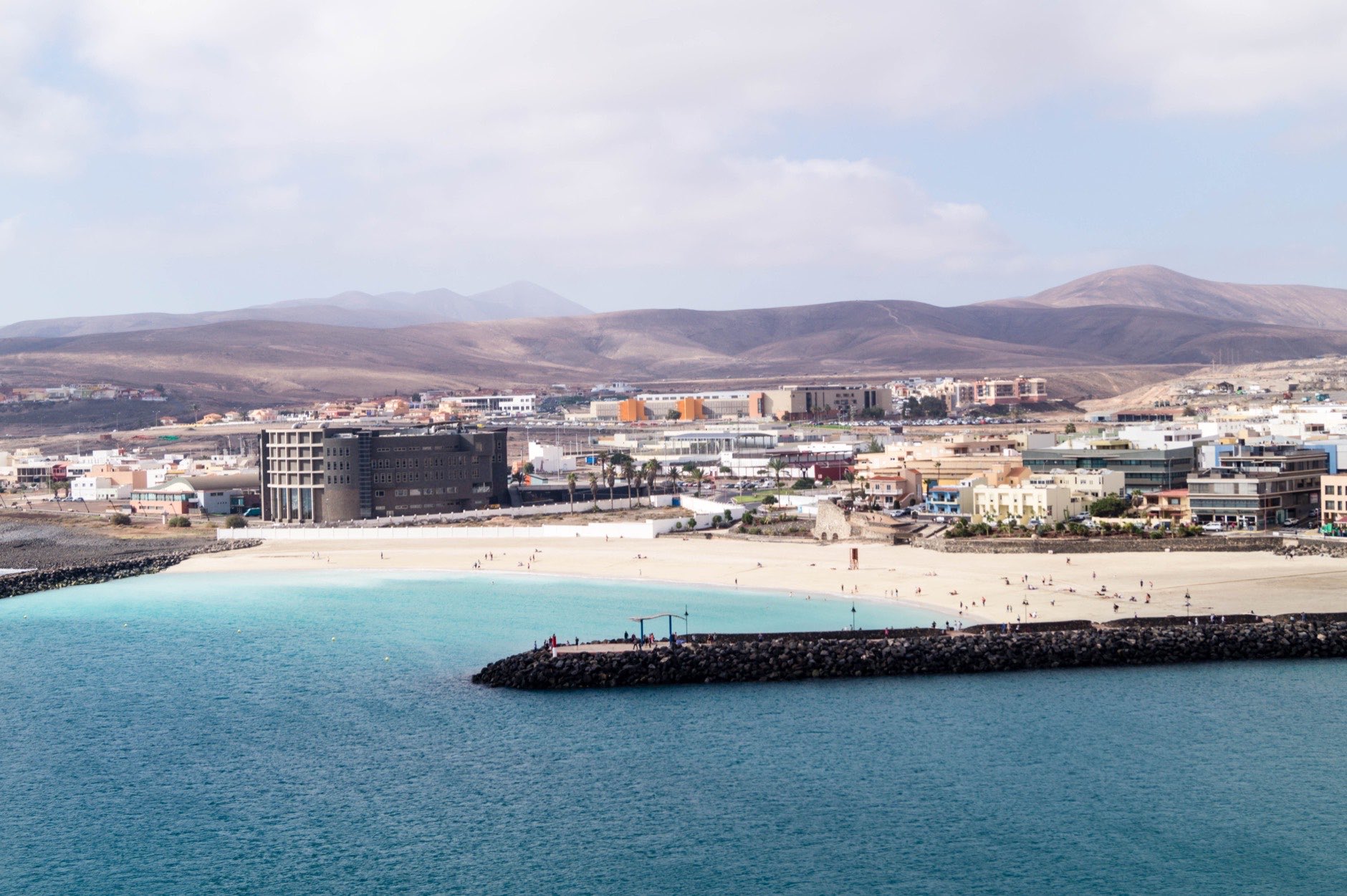
The Canary Islands are part of Spain, but Spain's sales tax, IVA, does not apply here. The VAT act leaves the islands out by name, and they have their own tax instead, IGIC. The standard rate is 7% against 21% on the mainland, and bread, milk, fresh meat, fish and medicines are zero-rated. That is the first way money works differently here. The rest — fuel, fares, household spending and rent — follows below, each figure with its source.
Short answers
- Sales tax: 7% instead of 21%, and 4 rows of the table below are taxed at zero.
- On 4 October 2026, petrol on the islands was 13–16% below the Spanish average and diesel 9–12% below it.
- Flights to the mainland and between islands: the state pays 75% of the fare for those the law counts as island residents.
- Bus and tram passes are free in 2026, paid for by the state.
- Spending per person is €12,652 a year against €14,066 for Spain, 10% less.
- A year of rent in the capitals of the two main islands is about half a resident's average income; in Palma and Málaga it is more.
IGIC instead of IVA: what is taxed at what
The islands sit outside the EU's common sales-tax area. So the IVA act excludes the Canaries, Ceuta and Melilla from its territory (art. 3), and the tax on goods and services on the islands is set by Canarian law. It has six rates, and the ones you meet most are zero, 3% and 7%.
| What you buy | Canaries, IGIC | Mainland, IVA |
|---|---|---|
| Bread, flour, milk, cheese, eggs, fruit and vegetables, olive oil | 0% | 4% |
| Unprocessed meat and fish, pasta | 0% | 10% |
| Medicines | 0% | 4% |
| Books, newspapers, magazines | 0% | 4% |
| Clothing, footwear, furniture | 3% | 21% |
| Buses and other land transport | 3% | 10% |
| Cafés, restaurants, hotels | 7% | 10% |
| Most other goods and services | 7% | 21% |
| Spirits | 15% | 21% |
The widest gap is on clothing, footwear and furniture: 3% against 21%. The narrowest is in cafés, restaurants and hotels: 7% against 10%. On bread, milk, medicines and books the gap is only 4 points, because the mainland already charges them its lowest rate.
Some things are not in the table. Household electricity up to 10 kW of contracted power is zero-rated in the Canaries (art. 52 r). Cigarettes carry 20% IGIC (art. 57), but tobacco also has its own excise duty, so one rate does not compare the price of a packet. Canary Law 4/2012, VAT Act 37/1992, consolidated texts, checked 04.10.2026.
Petrol and diesel: one day's snapshot
The Ministry for the Ecological Transition publishes the price at every filling station in the country and updates it daily. We took the 4 October 2026 download and worked out a plain average over the stations in each province, without weighting by where people fill up most. The Canaries are two provinces.
| Province | Stations | Petrol 95, €/l | Diesel, €/l |
|---|---|---|---|
| Las Palmas (Gran Canaria, Lanzarote, Fuerteventura) | 252 | €1.523 | €1.674 |
| Santa Cruz de Tenerife (Tenerife, La Palma, La Gomera, El Hierro) | 243 | €1.579 | €1.731 |
| Balearic Islands | 223 | €1.883 | €2.010 |
| Málaga | 308 | €1.830 | €1.959 |
| Alicante | 479 | €1.822 | €1.908 |
| All of Spain | 11,467 | €1.806 | €1.909 |
On that day petrol on the islands was 13–16% below the national average and diesel 9–12% below. Next to the Balearics the gap is wider: a 50-litre tank of petrol there cost at least €15 more than in either Canarian province. Prices move week to week, the gap between provinces more slowly; the link below repeats the download for today. Ministry filling-station map, data download.
Where the gap comes from. The state's fuel duty is not charged on the islands: the excise act leaves the Canaries out, as it does for tobacco, and keeps only the duties on beer, fortified wines and spirits there (art. 3). The islands charge their own fuel tax instead, and it is lower: €0.265 a litre of petrol against €0.473 on the mainland, and €0.222 a litre of diesel against €0.379. Those 21 cents on petrol and 16 cents on diesel make up most of the gap at the pump. Excise Act 38/1992, arts. 3 and 50, Canary Law 5/1986, art. 9.
Flights and buses
Island life means flying. The state pays 75% of the fare on scheduled flights between the Canaries and the rest of Spain, and the same between the islands. The discount has no end date. Some airport charges are taken off the fare before it is applied.
Ferries count too: on direct sailings between the islands and the mainland the discount is the same 75%, and on ferries between the islands it is smaller. Residence is asked for only at the last step of buying a ticket, just before payment. Once it has been confirmed electronically, the passenger shows the same ID as anyone else at check-in and boarding, and no proof of residence.
The law lists who gets it: Spanish citizens; citizens of the EU, the European Economic Area and Switzerland; their family members with a right of residence; and nationals of other countries with long-term residence, all of them living on the islands. Residence is shown with the padrón certificate, the certificado de empadronamiento. A temporary residence permit is not on the list. Law 17/2012, additional provision 13, Royal Decree 949/2018.
Buses and trams are free in 2026 on passes and multi-journey tickets: the state pays their full price, and the islands' government has undertaken to keep them free until 31 December. Single tickets, return tickets and tourist passes are not covered. The decree pays for 2026 only. On the islands a bus is a guagua, and timetables call it that too. The only tram is on Tenerife, between Santa Cruz and La Laguna. Royal Decree-law 17/2025, arts. 18–19.
What Canarian households spend
The state publishes no island price index, but it does publish spending. INE's household budget survey for 2025 puts the Canaries at €12,652 per person a year against €14,066 for Spain as a whole, 10% less. This is spending, not prices: a household with less income spends less even at the same prices. We call a gap in a group a gap only when it is larger than two of the survey's margins of error.
| Spending group | Canaries | Spain | Difference | Survey shows it? |
|---|---|---|---|---|
| Education | €174 | €229 | −24% | yes |
| Alcohol and tobacco | €135 | €173 | −22% | yes |
| Clothing and footwear | €462 | €567 | −19% | yes |
| Housing, water, power, gas | €3,863 | €4,674 | −17% | yes |
| Cafés, restaurants, hotels | €1,088 | €1,315 | −17% | yes |
| Furniture and household | €417 | €500 | −17% | yes |
| Insurance and financial services | €455 | €515 | −12% | yes |
| Personal care and other | €493 | €518 | −5% | no |
| Food and soft drinks | €2,150 | €2,255 | −5% | no |
| Health | €553 | €566 | −2% | no |
| Transport | €1,585 | €1,611 | −2% | no |
| Recreation and culture | €760 | €710 | +7% | no |
| Communications | €517 | €432 | +20% | yes |
Canarian households spend less than the national average on education, alcohol and tobacco, clothes and shoes, housing and utilities, eating out and hotels, furniture and household goods, and insurance and banking. They spend more on phone and internet. In 5 groups, food among them, the survey shows no gap: €2,150 against €2,255 per person is inside its margin of error. Spending by group, margins of error.
The biggest gap in euros is housing: €812 a person a year less than for Spain. Most of it is not rent that anyone pays. The survey adds an imputed rent for owners — what it would cost to rent the home they live in — and on the islands it is lower: €2,546 a person against €3,117, which is €571 of the €812. Rent paid on actual leases, spread over all residents, is higher instead: €630 against €584. The survey publishes no margin of error for these two lines, so they show where the gap sits rather than measure it.
Rent against income
In euros, rent in the island capitals is lower than in Palma or Málaga, but so is income. So it is more useful to measure a share: how much of a resident's average net income for a year goes on a year of rent at the median of existing leases. Rent is SERPAVI for 2024, income is INE for 2023. It is a rough gauge: the average income includes children and pensioners, and the two series are from different years.
| Place | Rent a month, median | Income per resident a year | Year of rent vs income |
|---|---|---|---|
| Puerto del RosarioFuerteventura, Canary Islands | €481 | €13,593 | 42% |
| TeldeGran Canaria | €520 | €13,303 | 47% |
| Santa Cruz de TenerifeTenerife, Canary Islands | €599 | €15,110 | 48% |
| Las Palmas de Gran CanariaGran Canaria, Canary Islands | €600 | €14,968 | 48% |
| ArrecifeLanzarote, Canary Islands | €500 | €12,079 | 50% |
| Adeje / Costa AdejeTenerife, Canary Islands | €633 | €12,060 | 63% |
| Palma de MallorcaMallorca, Balearic Islands | €800 | €16,181 | 59% |
| MálagaMálaga | €718 | €13,847 | 62% |
| AlicanteCosta Blanca | €608 | €13,681 | 53% |
In Santa Cruz de Tenerife and Las Palmas a year of rent takes no more than 48% of a resident's income. In Palma, Málaga and Alicante it takes 53% or more. The heaviest of the Canarian places in the table is Adeje / Costa Adeje, at 63%: its rent is the highest of the six and its income per resident the lowest, €12,060. The lightest is Puerto del Rosario, at 42%. The full rent table for sixteen places on the islands is in which Canary Island to choose. Rent register, income.
Further
How the islands differ in winter, sun, sea and quiet is in which Canary Island to choose. How to rent for a year and what a landlord asks for is in our long-term renting guide. The same spending figures for the Balearics are in the cost of living in the Balearics, and a month of living costs along the whole coast in the cost of living in Spain. When to go to Tenerife is in our month-by-month guide. All our places on the islands are on the pages for Tenerife, Gran Canaria, Lanzarote and Fuerteventura.

Run it on your own numbers
Nine questions about budget, savings and how you live. You get three places with the reasoning for and against each.
Take the quiz