Retiring to coastal Spain: who already lives there, how far the hospital is, and whether the town stays open in winter
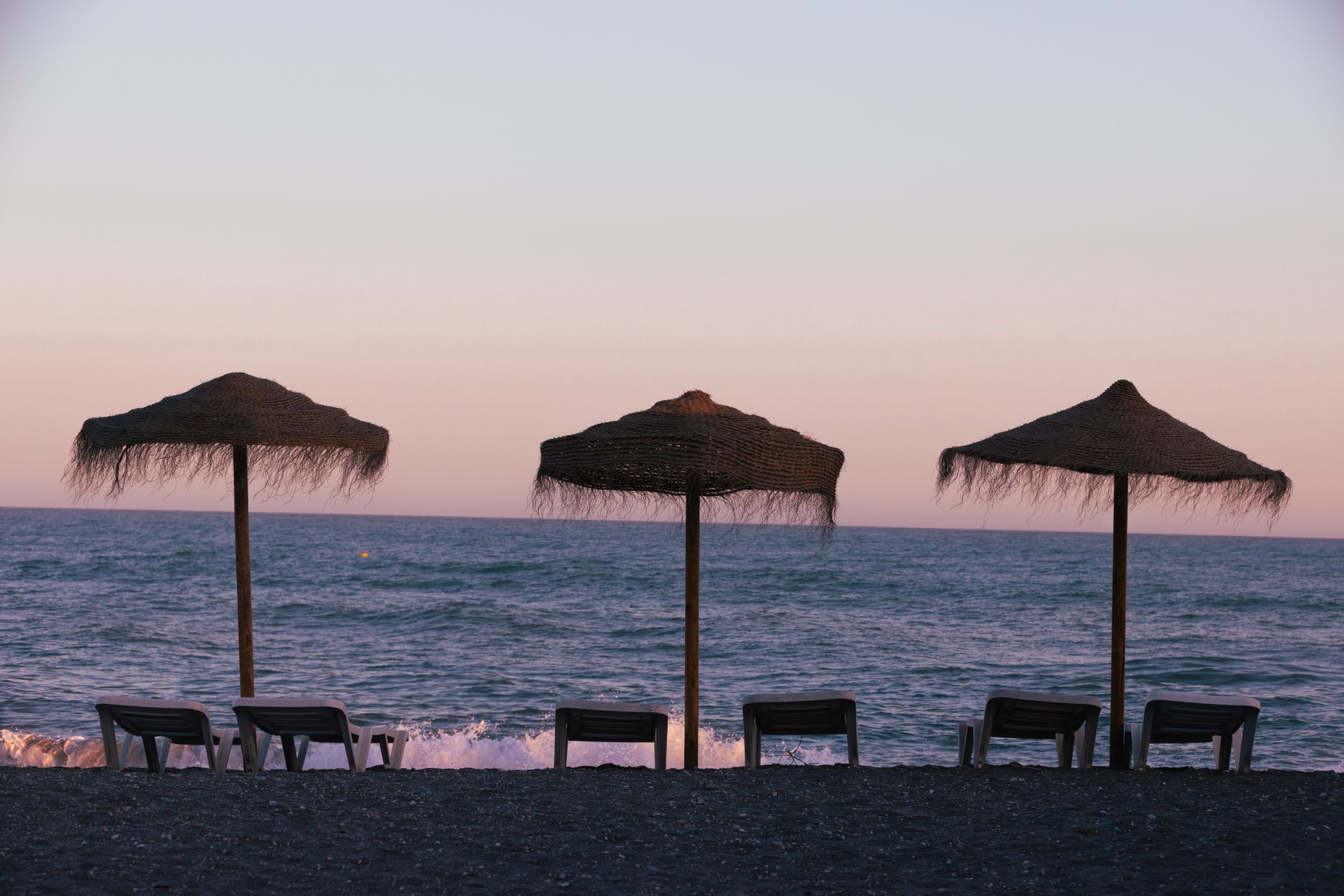
One in five people in Spain is over 65. Along the coast that share varies more than threefold: from 10.8% in Pájara to 33.2% in Camariñas. Below: where older residents are many and why those are not always resorts full of foreigners, how long the drive to a public hospital is, and whether the town stays alive in winter. There is no ranking of places to retire here: only what the numbers show.
Where the numbers come from
Age comes from the register-based census of INE, Spain's statistics institute (Censo Anual de Población). The same census gives the population of every place in our database and its breakdown by nationality. So all three numbers describe the same people on the same day. INE publishes the municipal age table separately for each province; the total for Spain is our sum of all 52 provinces.
INE gives age in five-year groups: 0 to 4, 5 to 9, and so on up to «100 and over». The share aged 65 or over here is the sum of every group from 65–69 up; the share aged 80 or over starts at 80–84. The denominator is every resident of the place, children included.
One caveat matters. The census counts people entered in the padrón, the municipal register of residents. A retiree who spends the winter here but stays registered at home is not in it. So for resort towns the share of older residents is more likely too low than too high. By how much, the census does not say, and we do not guess.
5 places in our database are villages inside a larger municipality: Torre del Mar, Corralejo, Maspalomas, Orihuela Costa and Moraira. The census gives age only for the municipality as a whole, which the village shares with the town next to it. So the villages are left out of the age figures, and 127 municipalities are compared. INE census 2025: age by municipality, table for the province of A Coruña.
Where one in four is over 65
The median across our database is 19.6% of residents aged 65 or over, slightly below the national figure. 50 of 127 municipalities are above the Spanish share. 24 pass the one-in-four mark, and this is where the main point shows: they are two different kinds of place.
20 of them are towns and villages where foreigners are under 13% of residents. All are in the north, in Galicia, Asturias, Cantabria and the Basque Country, except one: Cádiz. At least a quarter of residents there are over 65, and foreigners are less than half that share. So most older residents there are Spanish citizens. Whether they moved in from other regions, a breakdown by nationality cannot show.
The other four are different: Mojácar, Torrox, Puerto de la Cruz and Nerja. Foreigners there make up 21.1% to 49.3% of residents; in Mojácar it is almost half, and more than half of those are British. These are the towns people picture when they talk about retiring by the sea. But among the places where one in four is over 65, they are a minority. Their age profile is also younger at the top end: the median share aged 80 or over is 6.9%, against 8.6% for the 20 places with few foreigners.
| Place | Aged 65+ | Aged 80+ | Foreigners | To hospital | Winter |
|---|---|---|---|---|---|
| CamariñasTerra de Soneira, A Coruña | 33.2% | 9.9% | 3.5% | 45 min | 3/5 |
| LaredoCantabria | 31% | 10% | 6.3% | 6 min | 3/5 |
| MojácarLevante Almeriense, Almería | 30.5% | 6% | 49.3% | 36 min | 3/5 |
| FerrolGalicia | 29.6% | 9.7% | 7% | 8 min | 5/5 |
| FisterraFisterra, A Coruña | 29.3% | 9.1% | 5.8% | 17 min | 1/5 |
| GetxoBasque Country, Biscay | 29% | 8.1% | 7.7% | 13 min | 5/5 |
| LlanesAsturias, Costa Verde | 28.4% | 8.9% | 7% | 37 min | 2/5 |
| AvilésAsturias | 28.3% | 8.9% | 6.7% | 5 min | 5/5 |
| GijónAsturias | 28.2% | 8.4% | 7.8% | 9 min | 5/5 |
| TorroxAxarquía, Málaga | 27.9% | 7.5% | 39.2% | 17 min | 4/5 |
| CeeFisterra, A Coruña | 27.8% | 9.3% | 5.5% | 3 min | 4/5 |
| Puerto de la CruzTenerife, Canary Islands | 27.7% | 7.8% | 21.1% | 31 min | 5/5 |
| ViveiroA Mariña, Lugo | 27.7% | 9.4% | 8.7% | 25 min | 5/5 |
| SantanderCantabria | 27.5% | 8.2% | 11.6% | 4 min | 5/5 |
| CádizCádiz, Costa de la Luz | 27.1% | 7.8% | 3% | 7 min | 5/5 |
| RibadeoA Mariña, Lugo | 26.8% | 9.2% | 7.5% | 21 min | 4/5 |
| NerjaAxarquía, Málaga | 26.5% | 6.3% | 30% | 22 min | 4/5 |
| San Sebastián / DonostiaBasque Country, Gipuzkoa | 26.2% | 8% | 10.4% | 9 min | 5/5 |
| OviedoAsturias | 25.8% | 7.4% | 9.7% | 11 min | 5/5 |
| SadaAs Mariñas, A Coruña | 25.7% | 8.1% | 7.8% | 23 min | 5/5 |
| A CoruñaGalicia | 25.6% | 8.7% | 9.3% | 7 min | 5/5 |
| SanxenxoGalicia, Rías Baixas | 25.6% | 7.9% | 4.7% | 25 min | 2/5 |
| CarballoBergantiños, A Coruña | 25.3% | 8.4% | 4.9% | 33 min | 5/5 |
| BilbaoBasque Country, Biscay | 25.3% | 8.6% | 12.3% | 8 min | 5/5 |
Shares are of all residents in the census of 1 January 2025. «To hospital» is the drive in minutes to the nearest public general hospital; «winter» is our measured winter score from 1 to 5. Both are explained below.
British places are younger than they look
Britons are at least 5% of residents in 19 places in our database. Their median share of residents aged 65 or over is 19.5%, below the figure for Spain. Only 8 are above the Spanish share: Mojácar, Torrox, Nerja, Guardamar del Segura, Fuengirola, Calpe, Jávea and Mazarrón. At the other end are Yaiza (12.1%) and Adeje (13.2%).
The drive to hospital is longer from these places than is usual in the database: a median of 20 minutes against 13 across all places. 3 are more than half an hour away: Mojácar (36 min), Mazarrón (32 min), Pollença (31 min). In winter, though, most of them keep working: 16 of 19 score 4 or 5.
The census does not publish age by nationality for each municipality: INE has such a table only for the islands. So how many of the Britons in a given place are retired cannot be worked out from it. What does show is this: a place with many Britons is not necessarily a place with many older people. And the reverse: in the older places of the north there are almost no Britons, under one per cent of residents. INE, nationality.
The hospital by road
For every place we took the Ministry of Health's hospital catalogue (Catálogo Nacional de Hospitales) and found the nearest public general hospital by road. The time is calculated by the OSRM router on OpenStreetMap roads, by car and with no traffic. It is not an ambulance response time, nor the time in an August jam. Whether the hospital has an emergency department, the catalogue does not say.
We count a hospital as public when the catalogue shows it under the regional health service or another public body, or as a private hospital under a contract to stand in for the public one in its area. If there is no such hospital within 60 kilometres in a straight line, the nearest private one is used. Psychiatric, geriatric and long-stay hospitals are not counted. A private one was never needed: every place in our database has a public hospital in range.
- The median across 132 places is 13 minutes.
- 73 places are within 15 minutes.
- 15 are more than half an hour away.
- 5 are more than 40 minutes away: Mogán (65), Camariñas (45), Ciutadella de Menorca (45), Ayamonte (43), Isla Cristina (41). 2 of them are on islands.
A second line is age 80. People aged 80 or over are 6.2% of Spain's population. In 39 municipalities in our database the share is at least that, and in 4 of them the hospital is more than half an hour away: Camariñas (9.9%, 45 min); Llanes (8.9%, 37 min); Carballo (8.4%, 33 min); Puerto de la Cruz (7.8%, 31 min). Hospital catalogue.
Winter: does the town stay alive
Our winter score is a measurement, not an opinion. We take Seguridad Social data on how many employers pay contributions in cafés and restaurants, hotels and shops, and compare January with the peak month. 5 means the town works in winter almost as in summer; 1 means most of it is shut until spring. Every municipality in this guide has a measured score.
Of the 20 older places with few foreigners, 15 score 4 or 5. 3 are quiet in winter, scoring 1 or 2: Fisterra, Llanes and Sanxenxo. The four places with many foreigners score Mojácar 3/5, Torrox 4/5, Puerto de la Cruz 5/5, Nerja 4/5. So older residents live both where everything stays open in winter and where the town empties until spring.
This score says nothing about the weather. Air temperature is left out on purpose: in our database it is still an estimate for these places, and measured AEMET normals, from Spain's weather service, exist only for stations in the south and on the islands. The northern places in the table would have nothing to compare against.
Further
How the winter score is measured: winter liveability; where Britons live and how many: Britons in Spain; other communities: who lives where; UK licences after the move: driving on a UK licence.
Run it on your own numbers
Nine questions about budget, savings and how you live. You get three places with the reasoning for and against each.
Take the quiz