Where Britons in Spain actually live
There are more than a hundred thousand Britons on the Spanish coast, and they do not live where the articles say. This list comes from the census, not from impressions.
Our base holds 121 coastal municipalities where the census counted British residents, 128,910 of them in total. This is neither an estimate nor a survey: the census counts people registered in the padrón, by citizenship, on 1 January.
Where the most of them are
Barcelona comes first, and that is a trap. There are many Britons there simply because the city is huge: they are half a per cent of the population and dissolve in it completely. No English-speaking doctor next door follows from that, and no school either.
| Place | Britons | their share |
|---|---|---|
| Orihuela CostaVega Baja, Alicante | 8,780 | 10.4% |
| BarcelonaBarcelona | 8,523 | 0.5% |
| MijasCosta del Sol Occidental, Málaga | 7,541 | 8.0% |
| MarbellaCosta del Sol | 4,844 | 3.0% |
| Jávea / XàbiaCosta Blanca, Alicante | 4,550 | 14.8% |
| TorreviejaCosta Blanca, Alicante | 4,383 | 4.4% |
| MazarrónCosta Cálida, Murcia | 4,347 | 12.2% |
| FuengirolaCosta del Sol | 4,322 | 5.1% |
Where they actually dominate
A different list, and a more useful one. Here Britons are a visible share of residents, which means the things a community brings actually exist around you: shops, doctors, estate agents and schools working in English.
| Place | their share | winter |
|---|---|---|
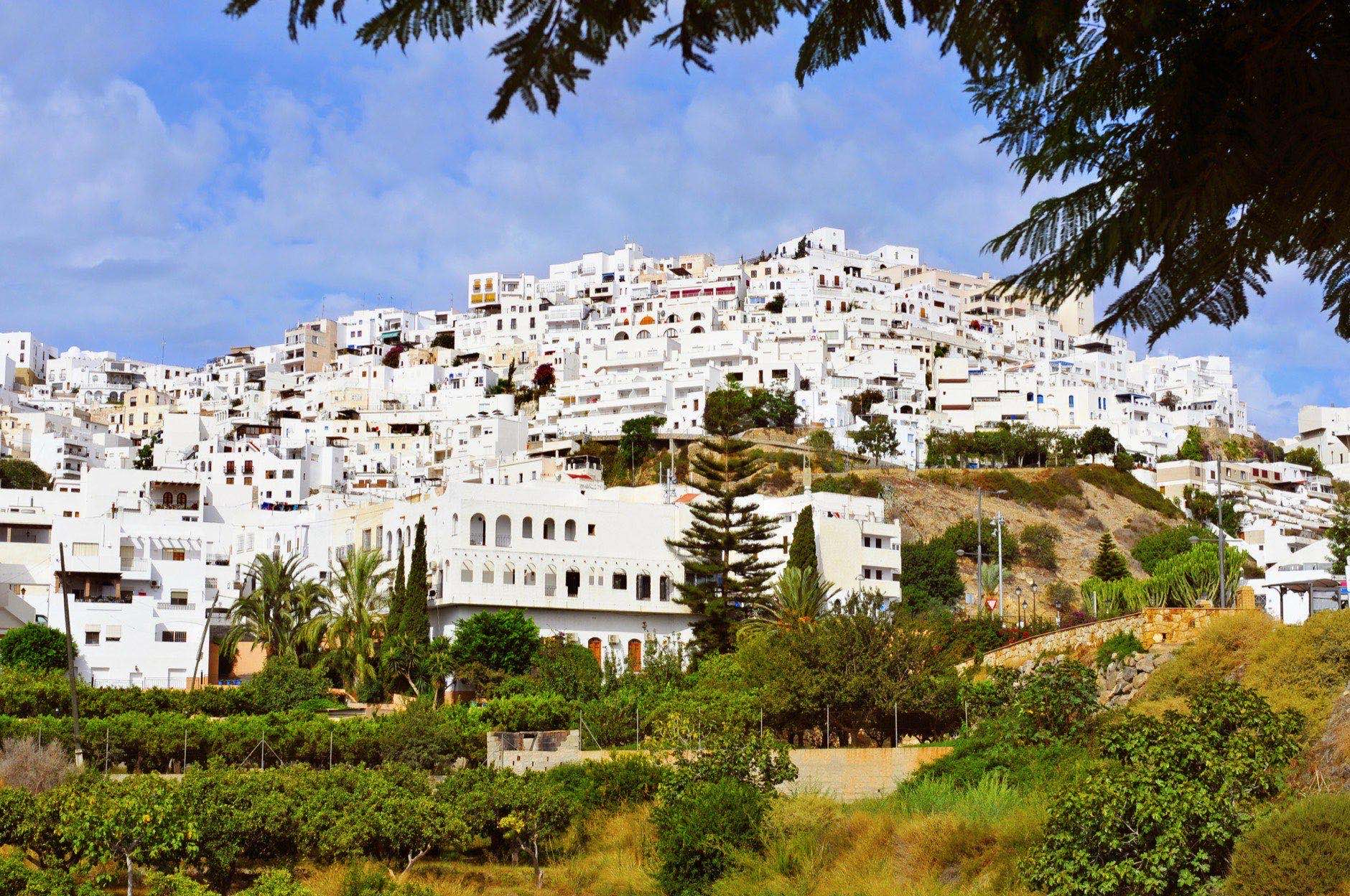
| MojácarLevante Almeriense, Almería | 25.5% | 3/5 |
| MorairaTeulada-Moraira, Alicante | 16.7% | 3/5 |
| Jávea / XàbiaCosta Blanca, Alicante | 14.8% | 4/5 |
| ManilvaCosta del Sol Occidental, Málaga | 12.7% | 4/5 |
| AntiguaCaleta de Fuste, Fuerteventura | 12.6% | 5/5 |
| MazarrónCosta Cálida, Murcia | 12.2% | 4/5 |
| Orihuela CostaVega Baja, Alicante | 10.4% | 3/5 |
| TíasPuerto del Carmen, Lanzarote | 9.9% | 5/5 |
And here comes the uncomfortable part
The eight most British places on the coast average 3.9 out of 5 on winter liveability, against 4.0 across the whole base. A dense community and a town that lives in winter are usually different towns. The reason is plain, and obvious to anyone who has wintered there: the British community grew around resort development, and a resort shuts from November to March.
This is worth checking before you buy, not after. In summer the difference is invisible: in August everything is open everywhere.
Where you get both the community and the winter
There are 8 such places in the base: Britons at three per cent of the population or more, and a winter score of at least 4. A compromise rather than an ideal, but it exists.
| Place | winter | coast |
|---|---|---|
| Jávea / XàbiaCosta Blanca, Alicante | 4/5 | Costa Blanca |
| ManilvaCosta del Sol Occidental, Málaga | 4/5 | Costa del Sol |
| AntiguaCaleta de Fuste, Fuerteventura | 5/5 | Fuerteventura |
| MazarrónCosta Cálida, Murcia | 4/5 | Costa Cálida |
| TíasPuerto del Carmen, Lanzarote | 5/5 | Lanzarote |
| TorroxAxarquía, Málaga | 4/5 | Costa del Sol |
| MijasCosta del Sol Occidental, Málaga | 4/5 | Costa del Sol |
| YaizaPlaya Blanca, Lanzarote | 5/5 | Lanzarote |
If money is the constraint
The price per square metre across the most British places varies threefold, and quality of life does not explain it. Here are the six cheapest among those where a community already exists.
| Place | Britons | winter |
|---|---|---|
| CartagenaCampo de Cartagena, Murcia | 2,067 | 5/5 |
| La Línea de la ConcepciónCampo de Gibraltar, Cádiz | 1,427 | 5/5 |
| Torre del MarAxarquía, Málaga | 1,050 | 4/5 |
| MazarrónCosta Cálida, Murcia | 4,347 | 4/5 |
| VeraLevante Almeriense, Almería | 913 | 4/5 |
| Los AlcázaresMar Menor, Murcia | 1,178 | 4/5 |
A community and services in your language are different things
Britons living in a town and a doctor who understands you are more loosely connected than it seems. The base marks English-language services as present in 58 places: a school, doctors, shops or lawyers working in English. That is under half of the 121 places where the census finds Britons at all.
The gap comes down to a threshold. Two hundred Britons in a town are neighbours you can talk to. Two thousand are a market where it pays someone to run an English-speaking practice and a school on the British curriculum. The difference between those two states is not comfort: it is whether you will need Spanish good enough to talk to an oncologist.
Source of the figures: the register-based census, table 66323.
Run it on your own numbers
Nine questions about budget, savings and how you live. You get three places with the reasoning for and against each.
Take the quiz