The coast without a car
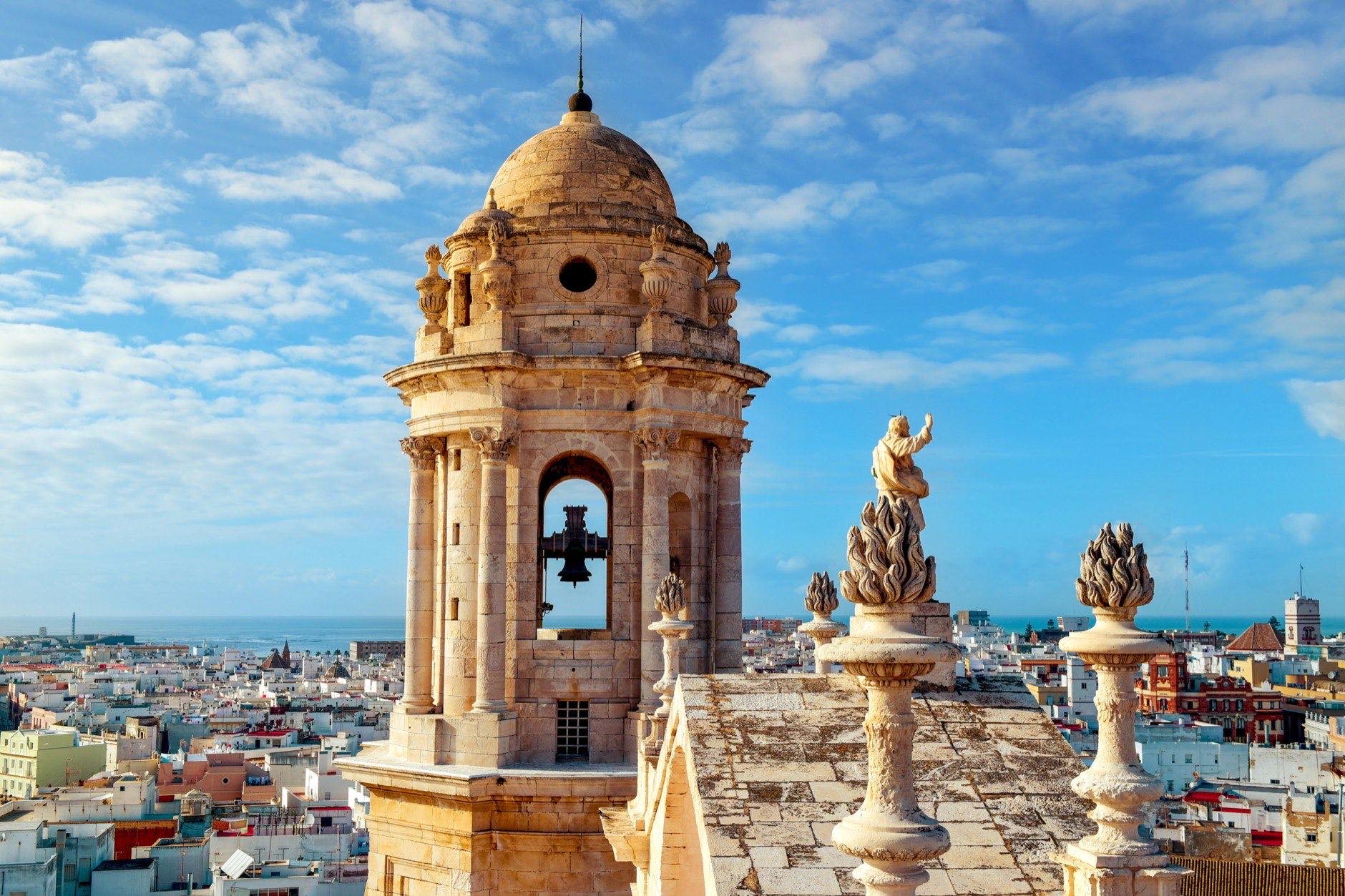
A car on the coast feels inevitable, and in most places it is. Not in all of them — and what decides it is not the size of the town.
The base has 19 places where living without a car is comfortable and 37 where it is a daily fight. What separates them is not population but layout: a dense old town with a pedestrian centre against a resort stretched eight kilometres along a highway, where the supermarket is a kilometre and a half down the hard shoulder.
What makes a town walkable
First and foremost, density. A Spanish old town is built so that everything fits within a ten-minute walk: two supermarkets, a market, a pharmacy, a bank, a doctor, a school and a dozen bars. A resort grown along a highway in the seventies is the opposite: housing here, the retail park there, four lanes and no crossing in between.
Second, the seafront. Where there is a continuous pedestrian paseo marítimo it works as the main street: people use it for shopping, commuting and strolling, and the town becomes walkable along its whole length. Where the promenade is broken by a port or private plots, pedestrian connectivity breaks with it, and people at either end effectively live in different towns.
Third, terrain, which people forget. A white village on a hillside photographs beautifully and in daily life means two hundred steps with the shopping and no way to push a pram. A coastal flat is duller and far easier.
Small towns where a car is optional
That you can manage without a car in Barcelona and Valencia is obvious. What matters are towns of a few tens of thousands where it also works: usually old port and spa centres that grew before the car and kept a dense core.
| Place | Car-free | Population | Train |
|---|---|---|---|
| SitgesGarraf, Barcelona | 5/5 | 32 690 | yes |
| CastelldefelsBaix Llobregat, Barcelona | 5/5 | 69 689 | yes |
| TorremolinosCosta del Sol, Málaga | 5/5 | 71 270 | yes |
| PontevedraGalicia, Rías Baixas | 5/5 | 83 339 | yes |
| FuengirolaCosta del Sol | 5/5 | 84 857 | yes |
| TarragonaTarragona | 5/5 | 143 260 | yes |
Small, and on the railway
| Place | Car-free | To airport |
|---|---|---|
| PontevedraGalicia, Rías Baixas | 5/5 | 25 min |
| FuengirolaCosta del Sol | 5/5 | 20 min |
| TorremolinosCosta del Sol, Málaga | 5/5 | 15 min |
| CastelldefelsBaix Llobregat, Barcelona | 5/5 | 15 min |
| SitgesGarraf, Barcelona | 5/5 | 30 min |
| AvilésAsturias | 4/5 | 20 min |
A train beats a bus
56 of the 132 places have a station, and that is the watershed. Coastal buses follow the season: every twenty minutes in summer, four services a day in winter. A train runs to its timetable all year, because it serves commuters to a big city rather than tourists.
In practice: a town with a station gives access to a hospital, an airport, specialists and work without a car and without taxis. A town without one leaves you dependent on a single bus route that may drop to three services in February and none on a Sunday.
What skipping the car saves
A car in Spain costs more than it seems at purchase: insurance, the ITV test every year or two, fuel, parking in an old town where there is almost none, and repairs on a vehicle that sits by the sea and rusts in salt air. In our cost calculator that line is a separate slider — try switching it off and watch the total shift across all one hundred and twenty-three places at once.
The difference usually exceeds the premium for housing in a walkable centre. That is the real trade-off: a cheap flat on the edge plus a car, against an expensive one in the centre without — and the second is often both cheaper and better.
Where a car is not optional
These are not bad places — many are prettier and quieter than the ones above. But life there is built around a car, and its cost belongs in the plan in advance: not just purchase and insurance, but the fact that in an empty resort in winter the bus runs every two hours.
| Place | Car-free | To airport |
|---|---|---|
| VeraLevante Almeriense, Almería | 2/5 | 115 min |
| ViveiroA Mariña, Lugo | 2/5 | 100 min |
| PeñíscolaCastellón | 2/5 | 100 min |
| RosesCosta Brava, Girona | 2/5 | 100 min |
| Jávea / XàbiaCosta Blanca, Alicante | 2/5 | 95 min |
| FisterraFisterra, A Coruña | 2/5 | 90 min |
Run it on your own numbers
Nine questions about budget, savings and how you live. You get three places with the reasoning for and against each.
Take the quiz